
11 Old-Fashioned Skills Gen-X Learned As Kids That Give Them A Huge Edge Over Most People Today
 Dave Adams | Canva
2:34…2:34…2:34…oooh, wait, here it comes….it’s about to drop!… FLIP! 2:35!!! Cool.
I was sitting on my grandmother’s bed while the other adults sat in the living room smoking Carlton 100s and talking about things I didn’t care about, like Jimmy Carter and gas prices.
As I sorted a bag of M&M’s by color (no red ones, ugh), I’d sit watching the fancy clock on the nightstand change as the little pieces of plastic flipped down to reveal the next number. The future had arrived. The clock was the latest technology on the edge of being digital.
But, thank God, if it didn’t work, we still knew how to read a clock. A real clock. The big round one on the wall. Most of us don’t know how to read a sundial. I get it, technology changes. But people can’t read a clock? Heathens!
I recently saw a reel posted by a Duke University professor who offered his students extra credit if they could tell him what time it was on an analog clock. As each student approached, he would change the time, and the responses were shocking.
Less than half knew how to read an analog clock. Clearly, none of these kids ever had to watch the made-for-TV movie “The Day After.”
When Armageddon hits, Gen-X will be leading the charge. Maps in hand, pointing out the Big Dipper, and knowing approximately what time it is by the position of the sun. Because we all learned “Never Eat Shredded Wheat” in 1st grade and know how to read a compass.
But in the meantime, here are some of the most important items and skills of the past that Gen-X earned, still uses, and frankly, gives us an edge over the youth today.
Here are old-fashioned skills Gen-X learned as kids that give them a leg up on young people today
1. Telling time
Like many things in this list, your dependency on all things made with chips, pixels, and giga-whatchas will catch you off guard when the second big bang comes. As I write, it’s 4:40. Big hand on the 8, little hand on the 5. Ask your grandma so you’re not late.
2. Reading paper maps/globes
 Rydale Clothing / Unsplash
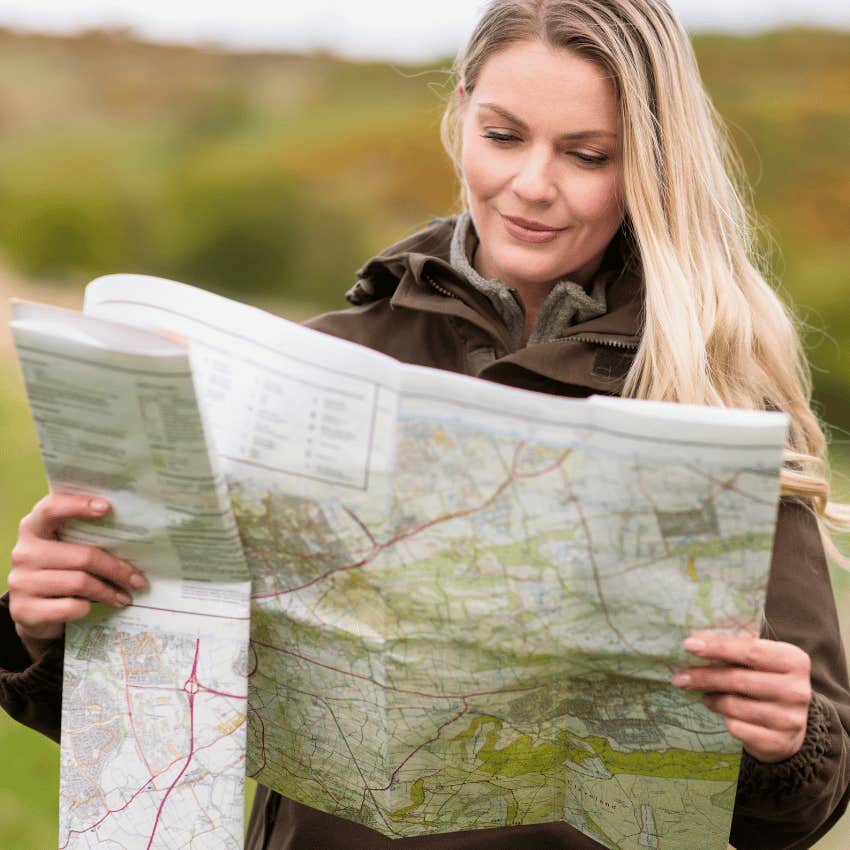
I love a good globe. My big sister had one back when Russia was still the USSR, and I’d study it for hours. Looking at the weird names of far-away places like Yugoslavia and California (Connecticut is 5000 miles away!). My parents would order a Trip-Tik from AAA to prepare for a big journey, as free maps were a treasure of their own.
In 2010, I handed my stepkids a map and told them, “We’re starting here and heading North. Follow the map to guess where we’re going.” They looked at me like I had two heads, laughed, and said, “What’s this? Just use GPS!” to which I replied, “What happens if you lose your signal?” Crickets. Gen-X wins the day and doesn’t freak over a detour.
3. Listening to tangible music
I have braced Spotify, iTunes, and the like, but again, when Jesus has his second coming and the web crashes, I’ll still have my CDs and vinyl. I still have two cassettes from 1981 that were taped on my portable tape recorder. My sister was visiting from Michigan, and I recorded all the family dysfunction unknowingly. Like Watergate.
4. Typing
We have the technology to type on anything, but does anyone actually learn how to type anymore? I’m guessing not, since everyone texts in code like OMG IMO TIS instead of The Quick Brown Fox Jumped Over the Lazy Dog (I did that pretty fast, BTW).
5. Visiting libraries
We know how to look stuff up without Google, and it’s a real skill using the Dewey decimal system. A system of numbers that made no real sense to help find an obscure book by Ernest Hemingway for a book report.
Here we also learned how to use an inside voice, which is why I’m irritated when people talk in a loud voice in places like libraries. antique malls and book stores. But the best part of the library was going with a friend and hiding out in some random aisle, waiting for cute boys to walk by — quietly.
6. Browsing encyclopedias
If you were lucky, you had your own library on a bookshelf at home. My parents got super bougie (or got roused by a book salesman) and bought the Encyclopedia Britannica family package. Three complete sets for the generations.
An adult set, a junior set for my sister, and the children’s set for me. The adult set was used until the year 2000, when I convinced my mother that using the 1972 EBs for medical advice probably wasn’t the best idea. I always liked looking at the layered cellophane pages of the human anatomy.
7. Dialing rotary dial phones
 Kateryna Hliznitsova / Unsplash+
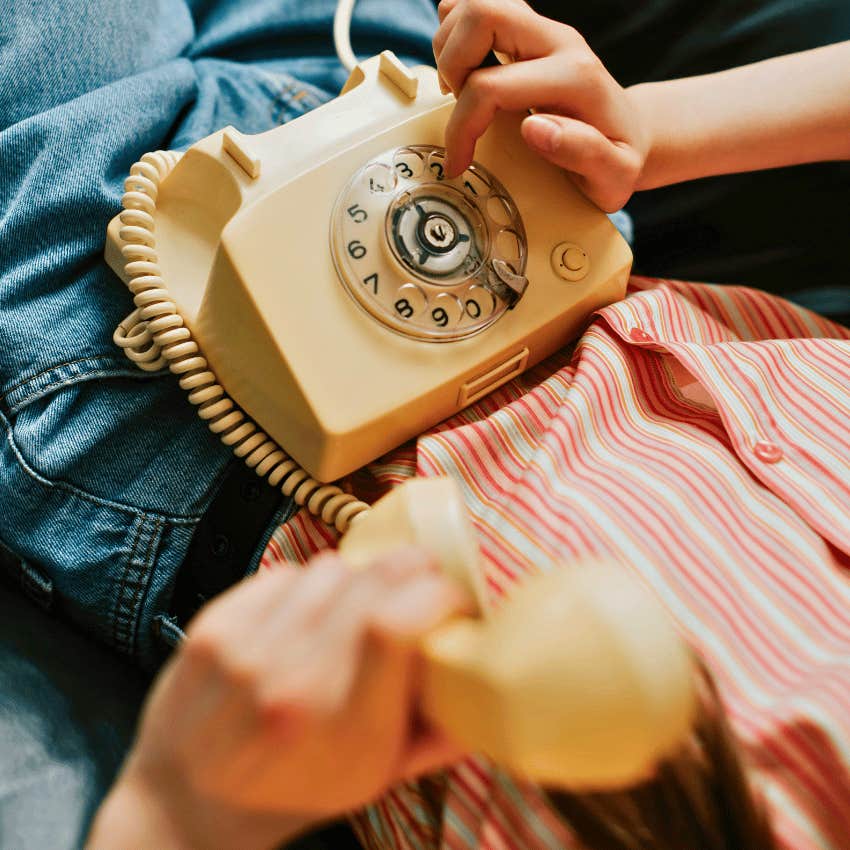
Maybe spinning your finger around and around in a hole doesn’t seem like a big deal, but the fact that we memorized every number is. We sang our phone number as we shot out of the womb, and could recite at least 10 different numbers by the age of five.
Now you’re lucky if you know your own number, and I bet 80% or more don’t know their partner’s. Of course, the memory being weird, I remember our first phone number in Connecticut, 225–6927, because it’s tattooed on my cerebral cortex.
8. Tinkering
I’d hang out in the basement or the garage with my dad, watching all the cool things he did, asking about them, and playing with different tools. I knew what ” Phillips or flathead” meant at the same time I was learning the Girl Scout oath.
When I left for the dorm at 17, I was sent with a small tool kit, “just in case,” and knew how to use it. Before replacing something, it had to be falling apart, duct-taped, wired, and clamped together first. Nothing was disposable, not even my earliest diapers.
9. Playing with toys that didn't need batteries
Before battery-operated brain suckers like Simon and Merlin, our toys took proper physical force. You had to push, pull, twist, flip, bang, and smash something to enjoy it. Everything we did for fun was based on how powerful your wrists, biceps, or legs were.
Bikes, skateboards, pogo sticks, all games with Pop-O-Matic (which your parents hated), Hungry Hungry Hippos, toy cars, bubble lawn mowers, Inchworms, and even SSTs. Those were only as good as the strength of the arm that pulled the plastic rip cord. We were the power, and that’s why we aren’t afraid of noise, movement, sharp things, and taking risks. Ever play with a set of metal Jarts?
10. Having no fear
The idea that fear is analog might seem weird, but think about how much the digital age has created anxiety, political correctness, snowflakery, helicopter parenting, or, God forbid, child-led parenting. (I have a strong urge to put the puke emoji here) which all feel like things based on fear.
We aren’t easily offended; we are more likely to do the offending. We aren’t trying to be ballsy; we just are. When five people can’t make a decision, we will, and when you look like you’re going to cry, we’ll quote you: “There’s no crying in baseball,” because we don’t tolerate a lot of nonsense.
11. Waiting for photos to be developed
Good lord, people! No one needs 5000 photos on any device, and that’s just my current phone. I am down with digital for the quality; however, part of the darkroom charm was the mystery of how the photos turned out — or didn’t.
Driving to the Fotomat with my dad to leave the film with the pimply weed smoker in the hut was an adventure, and if they didn’t come out blurry, all “ceiling”, overexposed, or mixed up with someone else's First Communion pics, you considered it a win. Sadly, in a few decades, no one will gather around the cloud to look at your dusty, aging memories. And with tens of thousands of them, neither will you.
Gen X gets a bad rap now for coming across as know-it-alls and cocky. We are. Only because we lived a completely off-grid lifestyle for the most crucial decades of our lives, we’ve grown with the blessings and the curses of the digital age. We’ve been entranced, star-struck, and in awe of all things futuristic. But we’ve seen the horrors of them as well. The fragmented thinking, lack of knowledge, slow comprehension, and dependence on all things technical are changing the development of humanity in a not-so-nice way.
So, after you read this, close your phone, tablet, or laptop for the day and go learn how to tell time like a caveman, take a bad photo and be okay with it, or make an actual phone call so you can properly speak to a human being without having a panic attack.
Kristen Crisp is the founder of Not Even Wine With Dinner, a community/mission for those looking for peer support with sobriety, self-esteem, mental health, aging, and all the things that come with being human. She is also a frequent writer on Medium under the handle @notevenwinewithdinner.

