
Study Finds When Kids Are Given Permission To Do This 'Bad' Thing, They Probably Won't
 Gabe Pierce | Unsplash
One of the hardest parts of parenting is being a disciplinarian who keeps kids on the straight and narrow. Whether it's teaching them not to talk back or not to break any household rules, children are constantly hearing from their parents why certain bad behaviors will not be tolerated.
However, recent research found that parents who actually encourage their kids to do a bad thing might be the best approach to preventing them from doing it at all. A study published in Developmental Science found that parents should start implementing this strategy with their kids, especially if their little ones like to stretch the truth, and they may see promising results.
Study finds that when kids are given permission to lie, they probably won't.
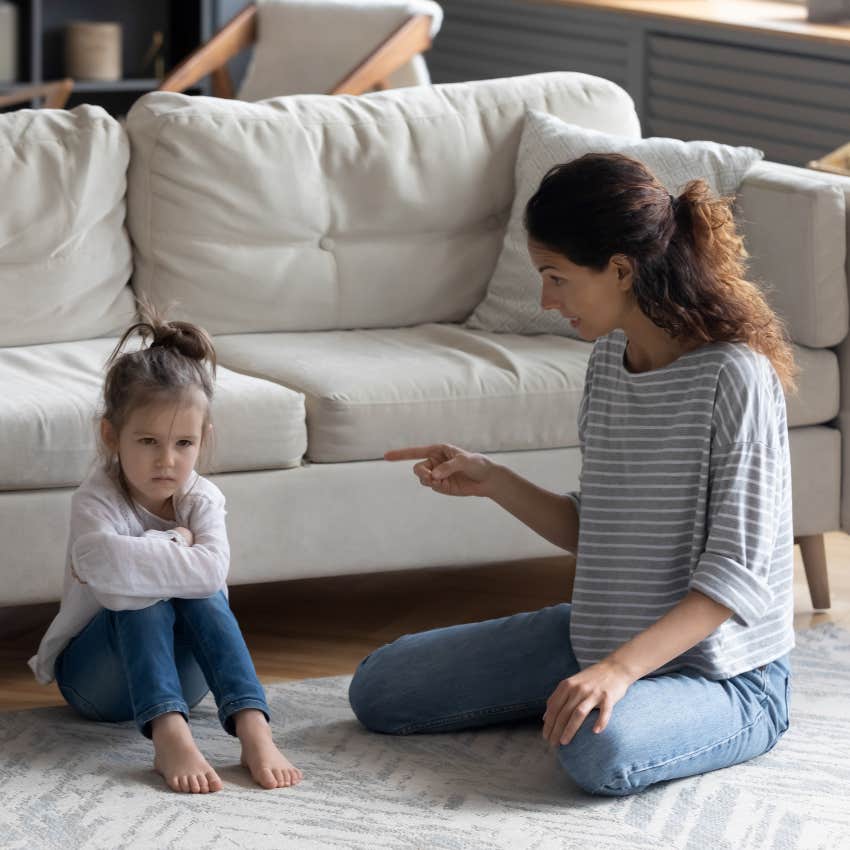
Kids lie. It's part of pushing the boundaries and asserting independence. Unfortunately, parents are left with the unpleasant task of playing lie detector and punishing them when it happens. But maybe they shouldn't.
 fizkes | Shutterstock
Researchers found that children were less likely to use deception while playing a game after being given explicit permission to do so. Yeah, you heard that right. When kids were given the green light to lie, they were more likely to tell the truth.
Most children learn about deception from a very young age. Usually, they grasp the concept from their parents teaching them that lying is bad, or through learning that lying can be a way to avoid punishment.
Study author Chadmen Tan and his colleagues wanted to "explore how the strong norms against deception in Singaporean culture interact with the context of a strategic game in which lying is morally acceptable and expected." They assessed how 3-to 6-year-old children would behave while playing a game when given permission to lie.
The study found that children lied less when told it was acceptable.
In the experiment, children were asked to play a game with one of the researchers. They selected 10 stickers with images of different cartoon characters. Then they were asked to hide a sticker under one of two identical cups while the researcher kept his eyes closed. The researcher then had to find the sticker.
The kids won if the researcher couldn't find the sticker, meaning they would have to lie or bluff when asked where it was. In the experimental group, before the game started, the kids were told: "Usually it is bad to give someone the wrong answer, but in this game, the rules say that you can give either the right or the wrong answer. So, in this game, you can say whatever you want to win." This instruction was not given to children in the control group.
The results showed that children in both groups lied between 60% and 80% of the time. However, children who were told it was okay to bluff as part of the game actually lied less.
Parents can model how bad lying is by not doing it in front of their kids.
Most of the time, kids pick up on behaviors from their parents, both good and bad. If parents are telling small lies, they usually internalize the belief that the truth can be bent. Kids then pick up on that and think it's fine to be deceitful too, since their parents are doing it.
 pics five | Shutterstock
"Young children, especially, cannot operate from a 'do as I say, not as I do' framework. They imitate what they observe. If we want honesty, we must model it — even when it’s inconvenient. The good news? Just as we teach hygiene, gratitude, and responsibility, we can intentionally teach integrity," explained pediatrician Kristen Cook.
As kids get older, parents can perhaps take heed of the study results. Perhaps explaining to their kids that there are times when fibbing a little is okay and times when it isn't. It might make them stop and think before acting.
Nia Tipton is a staff writer with a bachelor’s degree in creative writing and journalism who covers news and lifestyle topics that focus on psychology, relationships, and the human experience.

